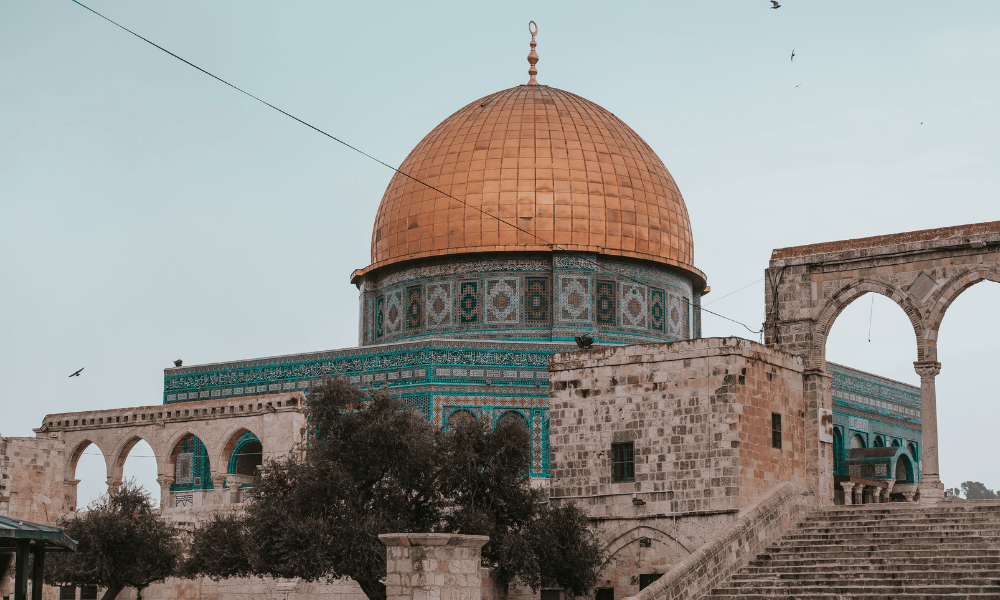
This question is asked in many discussions and debates between people, experts and politicians, and everyone gives their opinion in this context, and no one can say that one is right and the other is wrong… The reasons for this oscillation between right and wrong lie in the question itself and in the pitfalls that this question carries with it and the possibilities of answering it.
The history of human conflicts, especially those between the colonizer and the natives or between the aggressor and the victim, were very rarely resolved only militarily… that is, one side of the conflict surrenders, raises the white flag and accepts everything the victor does. In most cases, conflicts that start militarily and continue at an irregular pace end at the round table… that is, they end in a political solution. This is the first conclusion that leads me to conclude that asking the question in this way is wrong.
The modern history of mankind does not know of a conflict between the colonizer and the indigenous people in which the indigenous resistance movements were militarily stronger or had the military strength and weaponry to defeat the occupation on the battlefield. This is the second conclusion that leads me to the conclusion that any resistance movement against the occupation knows or must realize that one day it will be forced to sit at the table with its enemy to search for a political solution to a military conflict that does not end with a knockout blow, so asking the question in this way is either arrogant and smart or a trap for the respondent.
In the case of the Palestinian, things are very clear … and not from now, but from the beginning of the Zionist-Palestinian conflict. The Palestinian knew that the support for Zionism and its colonial project is far greater than the Palestinian’s own capabilities or with the help of his friends in the world or his Arab brothers to obtain this level of support to compete with it or even overcome it…
It is possible that some revolutionaries in the Palestinian revolution had and still have daydreams that the Palestinians can overcome
the Zionist occupation by force of arms and expel it from the geography … but this perception, as I said, is only a daydream, fantasy or populist wishful thinking.
Most Palestinian revolutionaries, politicians and intellectuals are aware of the reality of managing conflicts with colonialism and its inevitable course. Yes, the overwhelming majority realized early on that the armed struggle is only a means to improve the
conditions of negotiations with the occupier and those who stand behind him in case we reach the negotiating table… And yes, there is also a huge amount of populist revolutionaries who were and still are intentionally or unintentionally misleading their followers and masses by talking repeatedly through all means that in the armed struggle we will “eliminate them”.
It is an inevitable process in all revolutions … sometimes it is possible to minimize its impact, but it cannot be completely uprooted and prevent its impact or occurrence. In the Palestinian case, it must be emphasized that armed struggle without a political program is nothing more than a hollow revolutionary populist rhetoric … and political action without resistance on the ground is nothing more than chatter and a waste of time.
The conclusive proof of the Palestinians realization of the dialectics of peace and the struggle with Zionism and the strategy of
oscillating between the political and the military as twin factors in revolutionary action came in 1974 with the presentation of the Interim Program presented by the Democratic Front for the Liberation of Palestine as a new political program for the Palestine Liberation Organization and the Palestinian people. This strategy came after years of armed struggle of all kinds, in all places,
with all revolutionary strategies and without a clearly defined political program. After a long struggle over the points of the new strategy known as the Interim Program, it was adopted by all Palestinian parties, and the PLO obtained its legitimacy and unity of representation of the Palestinian people from many countries, peoples, and international institutions, and thus
became an essential component of the collective identity of the Palestinian people. Some Palestinians who were and still are
influential in the official institutions of the people thought that the occupation had reached a dead end in the process of suppressing the aspirations of the Palestinian people for the right to self determination on their land and that the global mass support and diplomatic embarrassment of Zionism would give the Palestinians great power at the negotiating table to achieve their national
demands.
The official Palestinian hastened to start the political track and move away from the revolutionary military track, also because of the
strategic mistakes made by the leadership of the MTF in assessing the events of the Iraqi occupation of Kuwait and the implications of this event for the Palestinian people and their cause. Since the beginning of the Madrid talks and later Oslo, and all that happened after that in the Palestinian situation between the political and military, we are witnesses to a conflict between three Palestinian parties: the official party represented by the leadership of the Liberation Organization, which considers that resistance work must retreat and end because the time is now for diplomatic work … and presented the Oslo agreement and the establishment of the
Palestinian Authority as an achievement that must be pursued to end the Israeli-Palestinian conflict. Despite all the failures that occurred in this process, an influential group in the leadership of the Palestinian people still adheres to this option and raises a slogan that “the alternative to negotiations is negotiations.” This is what I call in the Palestinian case “Abbasism” … i.e. the approach formulated and imposed by PalestinianPresident Mahmoud Abbas.
The second side of the conflict centers on the
forces of political Islam and some leftists, led by
Hamas and Islamic Jihad, who see armed struggle as the only way to achieve self determination for the Palestinian people.
Although Hamas, in its document issued in Doha a few years ago, opened the door to a pragmatic political solution, its rhetoric has been, not only since October 7 and the beginning of the Al-Aqsa
flood, but before that, a populist resistance rhetoric without a clear political vision and without a serious attempt to materialize the dialectics of resistance and politics.
The third party in the Palestinian situation is centered around some of the democratic leftist forces that, since the 1970s, have been calling for raising the two flags together; the banner of armed struggle and the banner of a political solution, but the weakness of this movements in all its components, its structural weakness, its popular weakness, and its leadership weakness, led to a decline in its influence in the Palestinian situation and also led to the ease with which it could be attracted by the first party or the second
party. Today, we are witnessing multiple alignments of this movement, which was manifested in the handling of the participation in
the recent Central Council meeting at its 32nd session in Ramallah.
The events of October 7, the Al-Aqsa flood and the fascist war on the Palestinian people in the Gaza Strip and the West Bank showed the depth of the Palestinian predicament and the limits of their political and military strategies.
It is true that the steadfastness of the Palestinian resistance in the face of the aggression and the inability of the occupation to impose its control and its agenda centered on displacement and genocide showed that racist and arrogant Israel can destroy, kill and besiege, but it cannot achieve an overwhelming military victory over the Palestinian people and their resistance despite
the official Arab silence and endless Western support. The complete elimination of the two state solution from Israel’s political dictionary, despite the Palestinian Authority’s cooperation in security coordination and its complete submission to all Israeli dictates and its beginning to implement the reoccupation of all Palestinian lands and the undermining of the Ramallah authority, showed that Palestinian diplomacy and Mahmoud Abbas’ strategy reduced to the alternative to negotiations is negotiations, and
also showed that we are facing a new Israel, the third Israel with a new ideology called Netanyahuism that plans a new Nakba and the building of Greater Israel, taking advantage of the Arab regimes’ eagerness to normalize the occupation and the near complete silence on the occupation’s crimes against the Palestinian people.
In light of this complex reality in which the Palestinian cause is going through, the shuffling of cards as a result of the many wars waged by Israel in recent times, and the collapse and retreat of forces and countries supporting the Palestinian people in the region, the question must be asked: What can be done?
The Palestinian fragmentation and the division that deepened and took root after Mahmoud Abbas’ speech before the Central Council and the Arab and international pressures on the Palestinian resistance and the Palestinian Authority in Ramallah, the Palestinian people stand at a dangerous and fateful crossroads … a crossroads with only two exits; either to submit to the pressures of the occupation and its displacement projects and other pressures that mean accepting less than a state and less than the right to self-determination, which at best can be a civil administration limited to some major Palestinian cities and gatherings, and with this
the issue Palestinian is completely bypassed and the Palestinian national project ends … The second way out, since the first way out is not an option for any Palestinian party, requires exceptional Palestinian boldness by all the political and social components of the Palestinian people, acknowledging the new situation and its precursors on the ground and starting practical steps to arrange the Palestinian house and radical changes to its organizational structure, political program and resistance program.
The first step in the project of building and adopting a new Palestinian strategy to get out of the bottleneck requires separating the PLO from the new Palestinian Authority, handing over the foreign policy file to the PLO, and separating the PLO presidency from the PA presidency. The PA is the manager of Palestinian affairs in the occupied territories only, while the PLO is the collective identity of the all Palestinian people, the guardian of their right to self-determination, and the sole legitimate representative of the
Palestinian people. The new Palestinian Authority should be built according to what was unanimously agreed upon in Beijing among the Palestinian factions, and within the new authority, an administrative body should be established to rebuild Gaza in coordination with Arab and foreign donors.
The second step is to rebuild the PLO and its institutions in accordance with the new reality and with the participation of all Palestinian Islamic and nationalist factions, taking into account the impossibility of holding fair democratic elections in these circumstances. The composition of the Palestinian National Council must reflect the reality of the new Palestinian components,
including factions and independents, and manage the possibility of one party dominating the council. The same applies to the Central Council and the Executive Committee, and the title should be “a new beginning with participation, not hegemony.” In this context, serious thought must be given to the financial management of the organization to avoid the exploitation of political money and the purchase of loyalty by any party in the organization, and in this context, work must be done to develop a “party law” within the organization and the PA to ensure the independence of political work. This requires a new structure for the organization’s
financial and economic body, away from the president’s monopoly on financial affairs, as has been the case since the founding of the PLO and has had a very negative impact on Palestinian political work.
The third step lies in developing a new Palestinian political strategy and amending the interim program that revolved around the two
state solution, which the new Israel has completely disavowed and is no longer a strategic option given the new realities on the
ground.
The new Palestinian strategy must provide solutions to the five main points in the conflict between the occupying power and the
Palestinian people: Borders, the right of return, Jerusalem, sovereignty and natural resources such as gas, water and oil.
The dilemma of the two-state solution, at its best, lacked a clear and comprehensive answer to some of these axes in one way or another and remained in generalities, which made these matters a quagmire for tensions, explanations and analyses in how to materialize them by the two parties.
The new Palestinian strategy must be based on the principle of respecting the reality that has taken root for a hundred years and the impossibility of one party eliminating another … Therefore, the strategy must focus on the principle of “win-win” in all its details for a just and lasting solution between the two parties to the conflict. In my opinion, the optimal solution lies in satisfying and realizing the aspirations of both parties to the conflict on the entire soil of historic Palestine, and I propose a solution centered on
building a federal state (6-8 federations) on the land of historic Palestine in which the two peoples of the conflict live in a federal democratic building, similar to many countries in the world such as Switzerland, Belgium or Germany … and here we can use the experiences of these rich peoples to overcome all contradictions between the ethnic and religious components of the federal state and economic parity between the federations … and here we can use the experiences of these rich peoples to overcome all contradictions between the ethnic and religious components. (In this context, I have a detailed study on building federalism and solving the five basic questions of conflict).
The structural crisis that is also plaguing the occupation makes the possibility of this project being adopted and supported by the international community in the future a good possibility. Yes, it is a new Palestinian offensive strategy and may appear to some as a utopian fantasy in light of the current balance of power, but this was also the case when the Democratic Front presented
its progressive program at the beginning of the 1970s. We must realize that nothing in politics is impossible and that the only law that governs politics is the law of change, renewal and repositioning … Those who want to survive must
change and evolve.