

The Palestinian State Game!
Official Visit Protocol
Those who think a state is built with construction, shopping centers, heavily armed security forces, and luxury cars for those sitting on the throne—ministers, directors, deputy directors, and employees—are mistaken. If that were the case, Costa Rica would not be a state... It has no army or multiple intelligence agencies, its construction is simple, and its decision centers meet in buildings more impressive than those in the villages of Ramallah and Nablus. Its police are not heavily armed, and most of its ministers, as in most Scandinavian countries, have no security escorts!
During my official visit last week with the German presidential delegation, I visited Ramallah after twenty years of absence. What I saw, observed, and experienced during my short visit with German President Steinmeier disgusted me and increased my anger at the bitter reality in occupied Palestine. It strengthened my resolve not to remain silent about the mistakes and to continue defending secular, national Palestine—a state for all its people—whose people have endured and fought for their dignity and pride for over a century and continue to endure aggression and injustice from the Zionists and collaborators.
During my visit, I saw people playing at statehood without sovereignty. I saw actors in a play called a state... and a people running after their daily bread... a resilient, authentic people despite the pain, who after a quarter-century of humiliation, have come to despise politics and politicians, even though they have given them everything, precious and cheap.
The meager participation in the recent municipal and local council elections in the West Bank, which did not exceed 30%, attests to the vast gap between the masses and their political leaders... The people are in one valley, and the politicians in another!
The visit began at the Beituniya checkpoint, where we transferred from the Israeli convoy (escort) to the Palestinian convoy. I felt joy and a thrill when I saw the convoy, the flag, and the Palestinian security men, and for a moment I thought I had been wrong in my previous assessments of the national authority and its supporters... But the joy quickly vanished as the convoy passed alongside the apartheid wall, and my anger grew when the German president asked the convoy to slow down as we approached the Ofer Zionist prison built on the lands of Beituniya and the village of Rafat under the Palestinian Authority. Our German embassy companion explained that many prisoners had been on hunger strike for weeks and that last week, Zionist settlers held a barbecue party in front of the prison. My anger increased, tears welled up, and I could not bear the sight despite the German president's political advisor's consolation. My indignation flared at the Palestinian security man who coldly and indifferently answered a question about the prisoners' situation, and I shouted at him in Arabic to be silent.
I was surprised by the massive presence of Palestinian security forces in all their colors and weapons, who closed all roads for the convoy's passage. One security man explained this was normal in Palestine to close all crossings leading to the convoy's route. The tight closure was not just for the few minutes the convoy passed a side street, as I had experienced in Israel, but for a long time before and after the convoy's passage, increasing people's suffering and tightening their lives, which are already restricted due to occupation, settlements, bypass roads, and checkpoints. I was further surprised by the heavily armed security men in pickup trucks, feeling like I was in Ain al-Hilweh camp, about to witness a clash, not in a state as its people call it! It was a pathetic theatrical production.
The image etched in my mind after the scene was that we are a military entity, not a civil one!!! What a fate and destiny... Palestine and its authentic people do not deserve this!
At first, I was happy to meet Palestinian Foreign Minister Riyad al-Maliki, who welcomed us at the rehabilitation center for the disabled in the village of Qubeibeh. I had met him years ago when he was a field commander for comrades in the Popular Front in the West Bank. But my joy vanished after he behaved negatively in a way I had never seen or experienced from any politician anywhere in the world. While all members of the German delegation, led by President Steinmeier and his wife, were shaking hands and calling patients, nurses, and the church administrative staff managing the center and nursing college, our minister isolated himself near the window, uttered not a word, and did not shake anyone's hand, as if it did not concern him! I was puzzled by this negativity and could not tell if it stemmed from insecurity or arrogance toward our people! In both cases, it is a disaster and a reality that explains the deep rift between the people and politicians in Palestine.
The biggest surprise that shocked me and shook me internally was when I visited the tomb of the late martyr, leader, and symbol Abu Ammar with the German presidential delegation. A military reception by the presidential national guard for the German president and his delegation... I looked around and stared at the soldiers searching for the keffiyeh! The symbol of the revolution, the symbol of martyr Abu Ammar... the symbol of Palestinian identity. Instead, I saw soldiers wearing British uniforms... What humiliation and rejection of identity and symbol. Look, Palestinians, at the Jordanian national guard with their red keffiyeh and uniform! The same scene repeated during our visit to the governorate. Then I remembered a wise saying: If a people forget and ignore symbols of their pride and identity, their destruction begins.
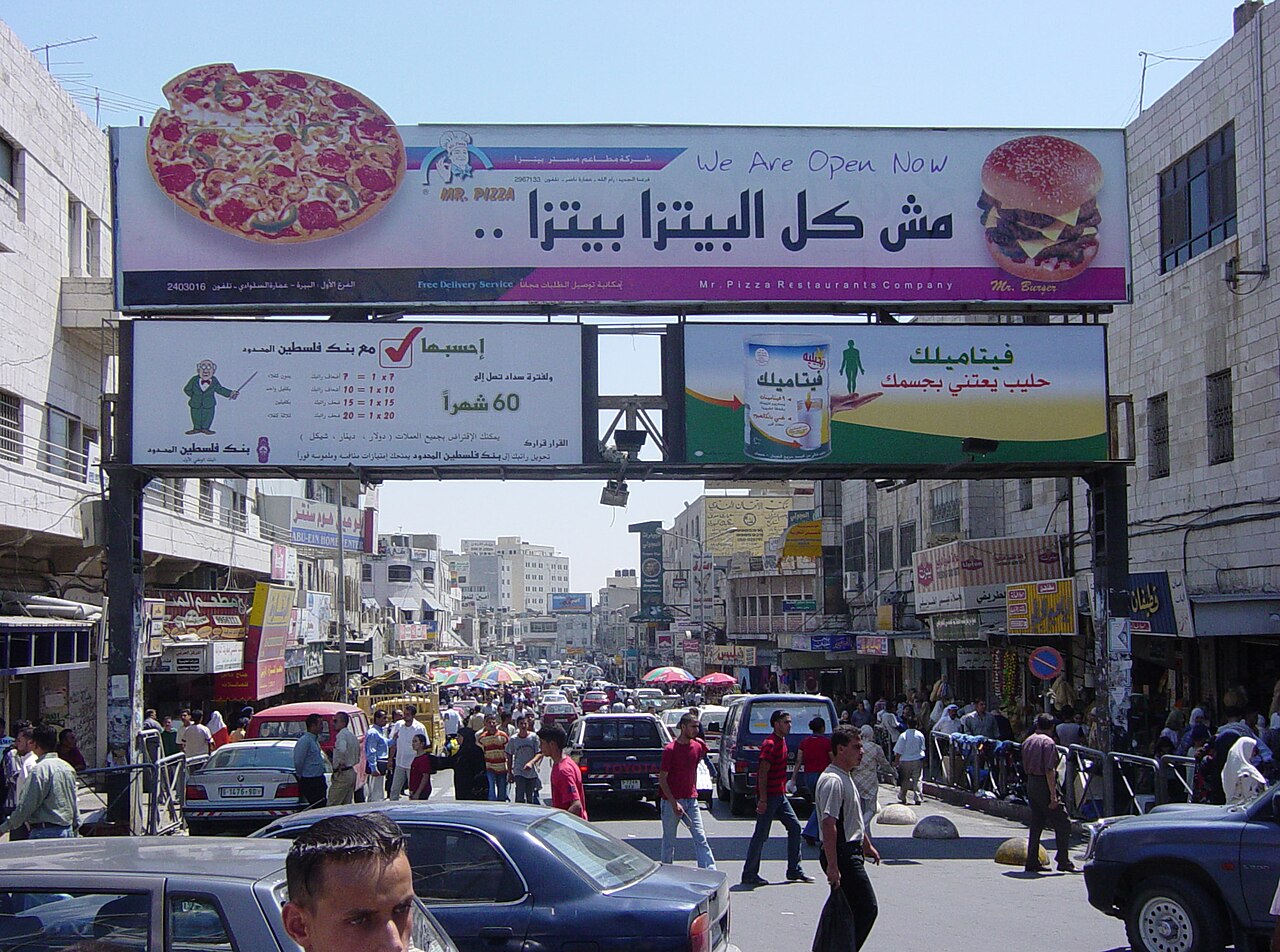
What I saw new in Ramallah after twenty years of estrangement is tall, massive buildings everywhere, armed security men openly displaying their weapons to assert their masculinity, piles of garbage in every corner, and a ruling system of authority and opposition representing a theatrical state while the people suffer.


