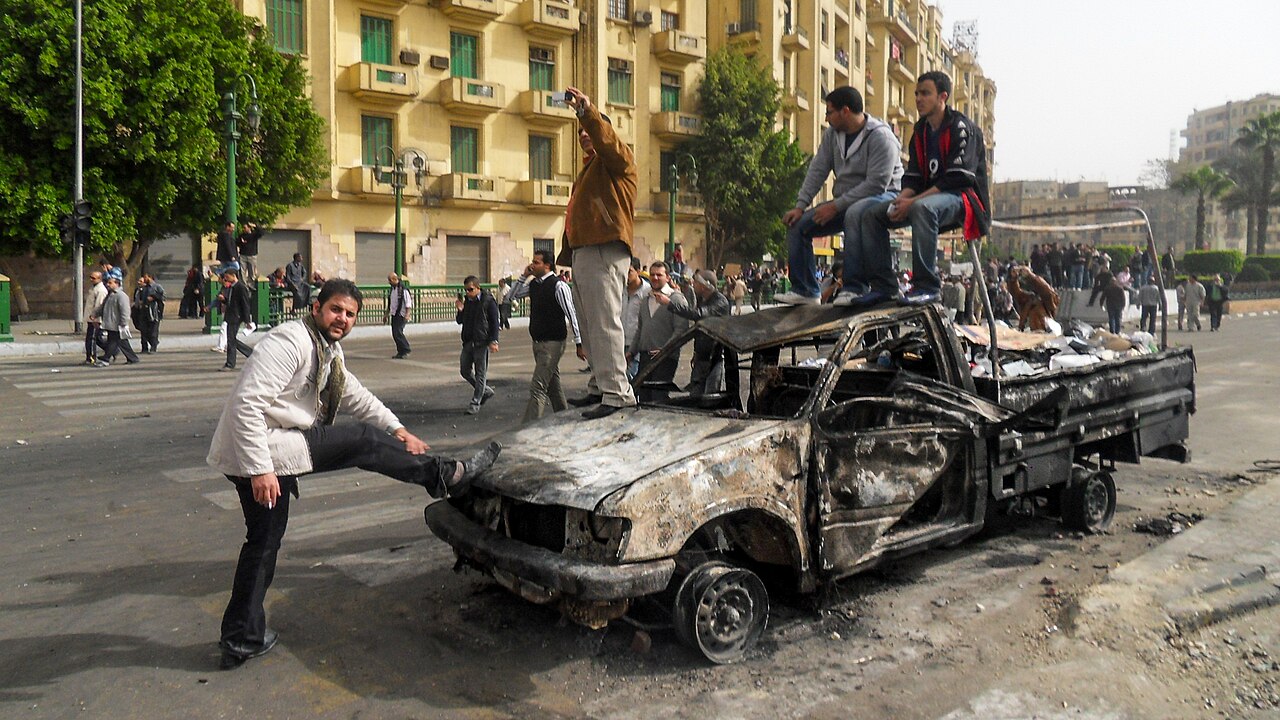
At the start of the Arab uprisings in Tunisia and Egypt, one could observe the expressions of solidarity of the rebelling masses with the Palestinian people. The young Tunisians and Egyptians did not only call for the removal of the Arab despots – they demonstratively showed their solidarity with the Palestinians, chanting in the squares of Tunis and Cairo.
The moment of hope
For the Palestinians, this was a moment of ambiguous hope. On the one hand, the uprisings proved that Arab societies could rise against oppression – and placed the Palestine question back at the emotional centre of the region, from which the peace-process era had pushed it away. On the other hand, the new actors had no programme for Palestine: their revolutions concerned bread, freedom and dignity at home.
The old guard reacted quickly. Whoever feels threatened at home needs diversion abroad – and the Palestine question served, once again, as the legitimacy reserve of regimes that otherwise offered their people little. Solidarity in the square, realpolitik in the ministries: this contradiction marked the entire Arab Spring.
What remained
A decade later, the balance is sobering. Tunisia has been politically eroded, Egypt has returned to autocracy, Syria lies in ruins, Libya divided. The Palestinian question has not been solved by any of the revolutions – but neither has it disappeared from the societies. It lives on in the disenchanted but watchful generation that has learned the difference between slogans and politics.
The lesson for the Palestinians is sobering and liberating at once: they cannot outsource their cause to the region's mood. Solidarity is welcome – strategy must be their own. Only a unified, capable Palestinian representation can convert the sympathy of the Arab street into political weight.